




K2 Gains Popularity Among Athletes
Monday March 7, 2011
Written by: Eric Adelson and Teddy Mitrosilis
ThePostGame.com
Mike Rozga started the site K2DrugFacts.com as a way to warn the public. It’s too late to save his son. He watched the Packers win the Super Bowl in his home, weeks after spreading some of David’s ashes in an end zone at Lambeau Field. David Rozga loved the Packers. He had a No. 4 tattoo for Brett Favre on his right shoulder, and he planned to add a No. 12 for Aaron Rodgers. He played football until he broke his leg as a sophomore in high school, and he often made the trip with his dad to Lambeau Field from his home in Indianola, Iowa. David Rozga dreamed of seeing the Pack win a Super Bowl.
He didn’t get the chance. Last June, he left a high school graduation party, returned home and took his own life.
David Rozga was 18.
His parents, Mike and Jan, blamed themselves. “It really made us look deeply at ourselves,” Mike says. “How terrible parents we were to not have seen this in our son.”
Two days later, David’s girlfriend, Carrie, came by with a confession: On the day he died, she said, David had been smoking a synthetic marijuana called K2, also known as Spice.
David’s parents had never heard of it. Carrie hadn’t, either. But when Mike Rozga called the police, he began to learn about an herbal blend sprayed with chemicals that mimic the high from marijuana. It’s marketed as incense but it is nothing like the stuff that makes your kitchen smell like potpourri.
Reporting by ThePostGame.com shows K2 use may be on the rise in the athlete population –- not only at various levels of amateur sport, but in professional sports as well. “I go straight weed in the off-season,” one NFL veteran told ThePostGame.com on condition of anonymity. “Then, in-season, when they test, I go to [K2].”
“It’s a danger to anybody who thinks this is a legal way to get high without being caught,” says Jay Schauben, director of the Florida Poison Control Center. “The possible side effects include significant hallucination, cardiac effects, seizures, rapid heart rate, hypertension, severe agitation, passing out, and panic attacks.”
Rozga believes a K2 high led to his son’s suicide. The Indianola police chief, Steve Bonnett, wrote a letter saying David “had a severe panic attack after smoking K2, which resulted in his death.”
“David suffered greatly,” Mike Rozga says. “He was tormented by this drug.”
Leading health experts believe more tragedy is to come -- and that athletes may be at particular risk.
“We’re receiving more reports of its use in the athlete population,” says Frank Uryasz, director of the National Center of Drug-Free Sport. “It appears to be marketed heavily to young people -- high school age and below, and college. We’re getting reports from colleges, where athletes are asking about it.”
One such report to the Drug-Free Sport hotline, from an NCAA athletic trainer, reads:
“Three student-athletes were breaking apart cigarettes, mixing it with K2, rolling it back up into papers and then smoking. One young man, who had NO past medical history, had a seizure and lost consciousness. He was found outside the dorm by campus security convulsing. His heart rate was elevated above 200 for enough time that he was admitted for 24 hours of observation … When asked why he did it: "I didn't think it would be that much of a rush, I had no control over my body in that I could see but could not talk or speak.”
Here’s another report, from another athletic trainer:
“We have a student-athlete who was in the emergency room over the weekend! Says he was smoking ‘Spice.’ His heart was racing, his blood pressure was off the charts, and he was hallucinating. This went on for hours!!”
K2, which was first identified in December 2008 is very similar to the compound that produces the high of marijuana. But K2 does not produce a positive drug test, and that is part of why its use has skyrocketed in the U.S. over the last two years.
According to the American Association of Poison Control Centers, there were 14 cases of K2 exposure in the 48 states plus the District of Columbia in 2009. In 2010, that number exploded to 2,888. Already this year, there have been nearly 1,000. In the last four months alone, 151 Navy sailors have been accused of using or possessing the drug.
The U.S. Naval Academy expelled eight midshipmen last month for using K2.
Several forms of synthetic marijuana were added to the DEA’s controlled substance list last week, including JWH-018, but it’s virtually impossible to identify and ban all of them.
K2 is relatively inexpensive and widely available; it’s even sold at some gas stations, according to several experts. David Rozga got his at a mall near Des Moines, according to his father.
ThePostGame.com recently bought a three-gram package of “K2 Peach” at a smoke shop in Orlando for $59.95. The package said “Not for consumption,” and it came with a small leaflet that said “Not … for human consumption” three times.
But it is being consumed, and athletes who use it are at particular risk, some experts say. “For athletes, you run the danger of having cardiovascular effects,” says David Kroll, professor of pharmaceutical sciences at North Carolina Central University. “I would hypothesize that with enough people using this stuff, you’re bound to see a heart attack.”
Performance-enhancing drugs may add yet another layer of risk. “If you combine these products and steroids, I can’t begin to predict the negative consequences,” says Anthony Scalzo, director of toxicology at St. Louis University. “If you add these stresses to the heart, someone’s probably going to have a heart attack from it.”
But those who use it often fail to see the danger behind the high.
“I used it freshman year,” one Division I NCAA athlete told ThePostGame.com, on condition of anonymity. “We tried it and realized that it has similar effects to weed. It was the first time where you could do something that you shouldn’t be doing but you couldn’t get in trouble for it.”
There are no confirmed deaths from K2, however the Drug Abuse Warning Network reports there were 374 emergency room admits last year because of K2 and similar substances.
“Sometimes you feel like your heart is going to come out of your chest, going to explode,” says the D-I athlete. “Your pulse just goes up like crazy. You literally feel like sometimes you’re going to die. But you wake up the next morning and you’re like, ‘Whatever, it’s fine.’
“If you smoke weed, you’re just chill. When you smoke K2, you are (messed) up. Sometimes I felt almost like drops of water were landing on my body somewhere. You’ll feel like a cool drop somewhere and I’ll check but there’s nothing. It’s weird. It’ll trigger different kind of senses around your body.”
The DEA plans to keep K2 illegal for at least a year. The NCAA has also decided to ban it, effective August 1 of this year, but according to NCAA associate director of health and safety Mary Wilfert, “We don’t have a punishment until a student tests positive.” And tests for K2 are not widely accessible.
“This market is always going to be available,” says the D-I athlete. “No matter what laws they pass, there will be a way to get around it. I don’t think there’s a way to test for (K2), so athletes are going to use it. Athletes are going to keep doing stuff they can get away with.”
That’s Mike Rozga’s biggest fear. He started the site K2DrugFacts.com as a way to warn the public, but it’s too late to save his son. He watched the Packers win the Super Bowl in his home, weeks after spreading some of David’s ashes in an end zone at Lambeau Field.
“We would have watched the Super Bowl together, without a doubt,” Rozga says. “As a lifelong fan, I was really happy. But it was one of the many things I’ll never get to share with David. I’ll never go to another Packers game with him.”
K2 Gains Popularity Among Athletes
Copyright © 2011 Sports Media Ventures, Inc. All Rights Reserved
Website is owned and operated by Sports Media Ventures, Inc.
K2 Gains Popularity Among Athletes
Posted by:Rocco--Tuesday, March 15, 2011

What is Heroin?
Posted by:Rocco--Tuesday, March 15, 2011
From the Drug Guide at THE PARTNERSHIP AT DRUGFREE.ORG
Heroin
What are the street names/slang terms?
Big H, Blacktar, Brown sugar, Dope, Horse, Junk, Muc, Skag, Smac What is Heroin?
Heroin is a highly addictive drug derived from morphine, which is obtained from the opium poppy. It is a “downer” or depressant that affects the brain’s pleasure systems and interferes with the brain’s ability to perceive pain.
What does it look like?
White to dark brown powder or tar-like substance.
How is it used?
Heroin can be used in a variety of ways, depending on user
preference and the purity of the drug. Heroin can be injected into a vein (“mainlining”), injected into a muscle, smoked in a water pipe or standard pipe, mixed in a marijuana joint or regular cigarette, inhaled as smoke through a straw, known as “chasing the dragon,” snorted as powder via the nose.
What are its short-term effects?
The short-term effects of heroin abuse appear soon after a single dose and disappear in a few hours. After an injection of eroin, the user reports feeling a surge of euphoria (“rush”) accompanied by a warm flushing of the skin, a dry mouth, and heavy extremities. Following this initial euphoria, the user goes “on the nod,” an alternately wakeful and drowsy state. Mental functioning becomes clouded due to the depression of the central nervous system. Other effects included slowed and slurred speech, slow gait, constricted pupils, droopy eyelids, impaired night vision, vomiting, constipation.
What are its long-term effects?
Long-term effects of heroin appear after repeated use for some period of time. Chronic users may develop collapsed veins, infection of the heart lining and valves, abscesses, cellulites, and liver disease. Pulmonary complications, including various types of pneumonia, may result from the poor health condition of the abuser, as well as from heroin’s depressing effects on respiration. In addition to the effects of the drug itself, street heroin may have additives that do not really dissolve and result in clogging the blood vessels that lead to the lungs, liver, kidneys, or brain. This can cause infection or even death of small patches of cells in vital organs. With regular heroin use, tolerance develops. This means the abuser must use more heroin to achieve the same intensity or effect.
As higher doses are used over time, physical dependence and addiction develop. With physical dependence, the body has adapted to the presence of the drug and withdrawal symptoms may occur if use is reduced or stopped. Withdrawal, which in regular abusers may occur as early as a few hours after the last administration, produces drug craving, restlessness, muscle and bone pain, insomnia, diarrhea and vomiting, cold flashes with goose bumps (“cold turkey”), kicking movements (“kicking the habit”), and other symptoms. Major withdrawal symptoms peak between 48 and 72 hours after the last does and subside after about a week. Sudden withdrawal by heavily dependent users who are in poor health can be fatal.
What is its federal classification?
Schedule I
Source: National Institute on Drug Abuse (NIDA); Drug Enforcement Administration (DEA)
THE PARTNERSHIP AT DRUGFREE.ORG is a drug abuse prevention, intervention, treatment and recovery resource, existing to help parents and caregivers effectively address alcohol and drug abuse with their teens and young adults.
© 2011 The Partnership at Drugfree.org
Breaking the anger-remorse cycle
Posted by:Lloyd Woodward--Monday, March 14, 2011
 |
| Do as I say or the hairdryer gets it! |
Excerpt from post: At this point Mom has to decide. Is she going to take this opportunity to instruct her son that she did not lie, that while she likes saving money that the real reason that she took the phone is exactly what she told him that it was, i.e., that he had restricted calls on his phone? If she does go down that path now there is hardly any turning back. This will become the new issue and the first issue may never be addressed. If she falls for that, then her son has successfully manipulated her away from the real issue.
It feels to the parent like the most critical intervention is during the anger stage. Indeed, it is a critical time, e.g., if a teenager is realizing a benefit to the tantrum then the parent has reinforced this behavior. So, if a parent gives in once the teenager begins his anger episode it can be very difficult to reverse this behavior because it has been historically reinforced; however, it is not as well understood that the the time of remorse is an excellent window in which to address this behavior. This posts attempts to highlight the importance of the remorse phase of the cycle.
Son: Mom, I want to know why you decided to take my phone off of me.
Mom: We discussed that.
Son: But you lied! You said I misused it but really you didn't want to pay the bill anymore.
Mom: You misused your phone by calling unapproved peers.
Son: I told you that was an accident but you just wanted to get rid of my phone. If you would have told me the truth I would have still been mad, but what I'm really mad at is your lying to me- why do you have to be a lying bitch?
Mom: OK, that's it- this discussion is over.
Son: No it's not [grabbing a hair dryer of mother's and throwing it at the wall] why are you always lying [yelling].
Mom goes for phone and dials 911 and immediately asks for an officer to keep the peace. Teen begins to calm down while officer is on the way. He is remorseful. He says it is mostly (but not all) his fault. He asks for another chance. He begs her not to call the police. He promised her that she won't be sorry if she doesn't tell his PO, his father, his therapist, or whomever is involved with his case.
Before we continue on with this role-play (hold that thought) lets examine some current ideas on this:
"Harmful Adaptations to Anger and Abuse: Walking on Eggshells. The most insidious aspect of abuse is not the obvious nervous reactions to shouting, name-calling, criticism or other demeaning behavior. It's the adaptations you make to try to prevent those painful episodes. You walk on eggshells to keep the peace or a semblance of connection.
"Women are especially vulnerable to the negative effects of walking on eggshells due to their greater vulnerability to anxiety. Many brave women engage in constant self-editing and self-criticism to keep from "pushing his buttons." Emotionally abused women can second guess themselves so much that they feel as though they have lost themselves in a deep hole."
These excerpts were taken from Compassion Power.
I realize that this website is not about parenting per se; nevertheless, I feel that this cycle of abuse remorse between adults is revelant to what happens between parent and teenager.
Keeping this eggshells analogy in mind, let's go back to our example above. At the point where the teenager turns remorseful, the parent is going to feel relieved. Crisis managed. Now the child is being nice. Now the parent wants to reinforce this behavior and therefore relaxes with the idea that the crisis is over; however, this may be as important a time to manage the crisis, with the idea that you are now setting the stage for the next crisis to be managed. Now is the time to use your PSST powers to good advantage.
Son: Mom, I'm sorry. I didn't mean that. I just got mad cause you know you don't always tell me the truth.
Mom: Excuse me? You make it sound like it was my fault that you blew up and broke my hair dryer and called me names.
Son: No, it's not your fault. It's my fault. I'm so sorry, [looks like he could cry if you look at him to hard]
Mom: Look, honey, I agree with what you first said, this was your responsibility. Whether you liked the way I said it or what I said, you are responsible for your feelings and your behavior. So, I'm with you- yeah you're sorry about that and I really feel that. Boy, that was a huge screw up.
Son: But I said I was sorry! You're not going to tell my PO are you? [Starting to get fired up again. A lot of times this is where the Mom backs down realizing that she doesn't want him to revert to the "bad teen" again so she starts her "walking on egg shells." But this mother knows that she has a window of opportunity here and she is not going to squander it.]
Mom: And I agree that you are sorry. I would be sorry too if I had acted like that and I agree that your PO will be very disappointed b/c you just talked to him about doing this kind of stuff.
Son: Mom he's going to drag me off to Shuman! Is that what you want? I wouldn't have got so mad at you if you hadn't lied to me. Now your going to have me sent away but you know I can't being lied to [crys and sobs].
Mom: OK, you know what, I'm just going to give you a chance to get yourself together- we'll talk about this when you get a grip on it. [Mom gets up and is ready to exit the room.]
Son: I'm stopping! [starts to raise voice again] God it's like you punish me for crying! I'm just expressing my feelings like my therapist told me to do.
Mom: You can do that. And if you need a moment to compose yourself that's just fine honey.
Son: Well, he said cause you gave me too much information when I was growing up, you know told me stuff about bills and stuff that I didn't need to know, that now I have trouble when people don't level with me. You should just tell me the truth or just don't tell me nothing but don't make something up.
PIVOTAL JUNCTURE: [At this point Mom has to decide. Is she going to take this opportunity to instruct her son that she did not lie, that while she likes saving money that the real reason that she took the phone is exactly what she told him that it was, i.e., that he had restricted calls on his phone? If she does go down that path now there is hardly any turning back. This will become the new issue and the first issue may never be addressed.
If she falls for that, then her son has successfully manipulated her away from the real issue.
For this example, our mother decides not to debate this one but to stick with the primary issue- i.e., (1)him being 100 percent responsible for what he did, and (2)what he is prepared to do to see that this doesn't happen again. This is the window to deal with this and if while you are addressing this he has another blow up- oh well, at least you showed him that you're not going to be intimated and start walking on "egg shells."
Mom: OK, [The teen has stopped crying- without that there was no point in continuing- it's just too powerful an effect when a man cries and we don't want to reinforce that behavior by giving him attention.] You don't need a moment to compose yourself?
Son: No. I'm fine.
Mom: Good. I see you are fine. Good job. Now, thanks for listening to me I know that you are upset and this isn't easy for you either.
Son: It's not. I just think we need to communicate better. We need to do what my counselor said and work on this together cause there's things you do that push my buttons and I push your buttons too.
Mom: I agree we certainly need to do that. We are always ready to set each other off aren't we? I'm glad you brought that up because what really sets me off is when I think I hear you saying that this breaking of my hair dryer and name calling is partly my fault. Yes, that really pushes my buttons and frankly I'm worried about how you are looking at this.
Son: What?
Mom: That I could be responsible in whatever way because you broke my hair dryer and called me a bitch. That is not something that I'm willing to share with you. You think I lied and that somehow kinda justifies you breaking my hair dryer and calling me a bitch. I don't buy that.
Son: But even my therapist says...
Mom: [moves in and lowers voice talking slowly] I'm not willing to take that responsibility from you.
Son: But it takes two of us
Mom: Yes, I agree that it DOES take two of us to have an issue and like I said I agree that we are both good at pushing each other's buttons- regardless, when you start breaking things and calling me names, I can't own that one.
Son: Well, it was 70 percent my fault but I still say it was 30 percent your fault. You shouldn't have lied to me to begin with.
Mom: I agree with one big thing you just said.
Son: What?
Mom: 70 percent and 30 percent equals 100 percent and you're right it is important to see who owns that 100 percent. Nevertheless, when you start with the throwing things and calling names no matter what i've said it's 100 percent your part now buddy. That's completely unnaceptable and dangerous!
Mom: And another thing I agree with is that as long as you believe that this is partially my fault that you become violent and out-of-control, your unnacceptable behavior will continue. This is not the first incident like this and from the looks of things it won't be the last incident. You are going to continue to repeat this mistake until you take responsibility and do what you need to do to stop it.
Son: But my therapist says that this happens because you always gave me too much information.
Mom: Your therapist is right honey, I gave you way to much power when you started acting out-of-control and I'm stopping it right now.
Son: What?
Mom: I tried to tiptoe around you trying hard not to say the wrong thing so that you wouldn't explode. That was wrong and you can tell your therapist that I can admitt that today.
Mom: I know I've been afraid of waking that angry beast inside you and I'm done with that now. I don't cause you to act that way, I can't control you when you get angry and I'm going to try to stop acting like it's even partially my fault. From now on when you are out-of-control, and hear me, I don't care if I lied to you ten times in one day! It's your responsibility to own this behavior and I won't allow you to pull me into it like that. I didn't call you names. I didn't break your stuff. You did that to me and if we don't get somethings straight here your going to continue doing stuff like that.
Son: Now I'm getting mad again- you're making me feel mad again.
Mom: Fine! Deal with it. Now what, you going to break some more of my stuff? [moving in closer lowing voice] Want to call me a bitch again? Do you think I'm lying to you now when I tell you that if you start breaking stuff again I'm calling the police back and I'm probably getting the same officer who was just here. But if that's what helps you calm down...
Son: That's not necessary. I'm just mad again is all.
Mom: OK, enough talk. Let's wrap this up. I agree your sorry.
Son: I am.
Mom: That's good. Well, I'm going to give you a chance to prove that one- I need the basement cleaned up - a really good job- I am grounding you until that's done. Also, the phone is finished now and you can be sure I'm not lying about that!-
Son: You said you were taking it for a week!
Mom: Yeah but I'm the one whose sorry now, cause I'm sorry but I'm confiscating it until further notice and we'll see if you can learn to control your temper before I even consider returning it.
Son: But you said...
Mom: I agree with you I'm a big liar then. And I change my mind sometimes. Does that help? I lied about taking it for a couple days cause now I'm taking it until further notice. I will also need your game system and TV taken out of your room.
Son: What! What am I going to do here?
Mom: I don't know- but you said you were sorry so I guess we both can still agree on that one. When you call me a bitch and throw my stuff then it doesn't matter what a big liar I am- it's your responsibility. You have to deal with it and if you're as sorry as you say then you won't complain about the consequences. What you did was wrong, dangerous, unacceptable, and I refuse to keep that kind of behavior secret from your PO You can call him and tell him or I will.
Mom: One last thing. I'm glad you can talk to your therapist and I think he is great. When you see him this week, please talk to him about developing a plan to help you stop this cycle of anger-remorse. Nothing will be returned to you until I see that you are prepared to take responsibility for these unacceptable outbursts and do do something to see that you stop them.
Mom: That's it. We're done. This meeting is over.
Son: You don't believe I'm sorry.
Mom: I told you that I do believe you're sorry, but I suppose you think I'm lying about that too.
Son: Kinda I do, cause if you believed I was sorry you wouldn't do all this.
Mom: Oh I think you are sorry. I just think your even sorrier now that I've given you these consequences and I think that if this anger- remorse behavior continues you might find that you are even more sorry. Please understand this part: NEVER call me names. NEVER throw my stuff around.
Son: I won't.
Mom: And that hair dryer costs like fifty bucks so you need to add that to what you owe me.
Son: How am I supposed to pay that? I don't have a job!
Mom: Listen, good job listening. This was a huge confrontation and you heard a lot of stuff that upset you- but you didn't call me a bitch again and you didn't break anything else. That's a start. Don't worry about getting the TV and game system out of your room tonight- I can grab it tomorrow while you're at rehab-We'll talk later [gives hug but teen tries to not return it and walks away.]
Share Read More......
Mult-Systemic Therapy, or MST
Posted by:Max--Wednesday, March 09, 2011
PSST Parent Wilma has often mentioned she is using "MST" in her home with Bam-Bam. I keep asking her "what do you mean by that again?" Wilma kindly sent me information on Multi-Systemic Therapy, or MST. This is new to Allegheny County within the last 2 years. It is a home-based therapy where the goal is to keep the child in the home and not sent to a facility. It may not be right for everyone, but it may be a good alternative to know about for others. Please read on if you think these services can help your family.
Wilma's family is using a place called Harbor Creek Youth Services (MST at Harbor Creek www.hys-erie.org) The following information is from them, and is not endorsed by Juvenile Probation or PSST. It is simply information we would like you all to be aware of. Harbor Creek is now seeing patients with Managed Care insurance, so they may not have updated brochures yet. Wilma had a psych eval for son Bam-Bam conducted by a master level therapist who works for a psychological practice called Lancaster-Hugh Smith PhD Associates. New referrals will most likely start out with a psychological evaluation, so the child is properly assessed, as these services will not be appropriate for everyone. IMPORTANT HINT** If you have had previous evaluations for your kid, always offer them to a new tester, as it is valuable information for comparison. Also, any anecdotal information from forms filled out by teachers or previous therapists are also good to have on hand. The more well rounded picture of your teen, the more appropriate and targeted treatment can be.
MST Frequently Asked Questions:
Is MST for everyone?
No. In general, the MST program targets youth at risk for out-of-home placement for behaviors that are viewed as “willful misconduct”. Please contact the MST supervisor for a list of inclusionary and exclusionary criteria if there are questions regarding specific behaviors/criteria.
How is 24/7 availability defined?
This is always driven by the families needs; specifically, 24/7 means that the family has access to the primary therapist or a member of the MST team – at any time – who knows the details of the case and the appropriate response to the family’s needs or concerns.
How is MST different from a Crisis Team?
The crisis team is designed for short-term crisis intervention, and can be contacted by the family (or temporary caregiver) at any time. MST Therapists are also prepared to respond to crises when families call. Also, for families who appear to be at risk for crisis development, MST Therapists receive on-going supervision and consultation to develop “safety plans”. Such plans would include calling the therapist. If, in the event of a crisis, the family chooses to utilize services other than, or in addition to, MST, the MST Therapist should be contacted as soon as possible in an effort to develop a collaborative plan of action for future crises. Ideally, this contact should be made by the family, but could also be made by a member of the Crisis Team (with proper consents).
How is a MST referral made?
A referral can be made by faxing the referral packet to the MST office. This packet should include the 412 referral form (CYF), Harborcreek Youth Services referral form, and all other relevant information pertaining to the case. After the referral is received, the MST Supervisor will contact the caseworker or JPO to obtain any additional information required for the acceptance/denial of the referral and a decision will be made at that time.
How persistent is MST?
Since MST Therapists are held accountable for case outcomes, every effort will be made to engage families in treatment. At the outset, engagement of the family is seen as a treatment challenge that can be addressed. Various strategies that are professional, persistent, and utilize assets within the ecology, will be attempted to engage the family in treatment.
Can MST initiate services before the targeted youth is home?
Yes. MST can begin 30 days prior to the youth’s return into the home. During this time, MST will prepare the parents/caregivers for the youth’s return home as well as work with the placement to ensure there is a smooth transition back into the home, school, and community.
How long do MST services last?
MST services typically last between 4-6 months. When there are indications that longer treatment will result in significant improvement in the youth’s behavior, treatment can be extended. The program supervisor and consultant must approve all extensions of treatment.
What does MST do about adolescents using/abusing substances?
The scientific literature indicates that adolescent substance use/abuse is maintained by the same factors that maintain other delinquent behavior. These include being with other peers who use/abuse substances, family factors, and school factors. As such, the MST Therapist works with the ecology surrounding the youth to change these factors…the same as the MST Therapist would do in reducing criminal behavior, aggressive behavior, or school truancy.
Who provides individual therapy?
The MST Therapist, but only in certain well-defined circumstances. In general, individual treatment of the adolescent is done when other ecological interventions have been implemented consistently and the youth’s behavior has not changed. In caregivers, individual treatment is done when a barrier to engagement or goal achievement is found. During individual treatment, empirically supported interventions are the focus of treatment (e.g., CBT).
Harbor Creek is not the only group doing MST. For other resources, please google MST Allegheny County.
Families Anonymous Meeting - Tuesday Night - Squirrel Hill
Posted by:Rocco--Wednesday, March 09, 2011
TEENAGE ADDICTION? NEED SOME PARENTAL SUPPORT? STILL NOT SURE THAT YOU'RE THE ONE WHO NEEDS HELP? LOOKING FOR PEACE IN YOUR HOME?
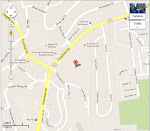
"Families Anonymous" on Forbes Av. is now meeting,
Tuesdays nights from 6:00 - 7:30PM We hope you will join us at:
Gateway Rehab Squirrel Hill
5818 Forbes Ave, Pittsburgh, PA 15217
Click Here For Map
Near the intersection of Forbes Ave and Murray Ave
(412) 697-0928
What exactly is Families Anonymous? - click on Read More
Families Anonymous is a 12 Step Support Group for Anyone whose life has been adversely affected by another person's use of drugs, alcohol, or related behavioral issues.
NO Fees - NO last names used - NO forms to fill out
NO formal sign-up – NO obligation – NO commitment
NO saying “I’m Sorry”
Families Anonymous is a group of concerned parents, relatives and friends whose lives have been adversely affected by a loved one's addiction to alcohol or drugs.
Every one of us has made the same statement at one time or another...
"But I'm not the one who needs help!"
It was obvious that someone else near to us was the one with problems.
Many of us were amazed, annoyed, saddened or shocked that our children refused our help, maybe even resented our efforts to help and would not acknowledge that they have a problem.
Families Anonymous is dedicated to doing something constructive about our approach to our loved one's problems. We learn from our own experience, but we can also get a great deal of benefit from the shared misery and foolish mistakes we make while trying to do the best we possibly can do.
That realization, in itself, goes a long way in helping us to start feeling good about ourselves... and, amazingly, sets the stage for the recovery for both of us in many, many cases.
Please join us on Tuesday nights from 6:00 to 7:30 p.m.
Allow Families Anonymous to Help You on Your Road to Recovery.
Click on Families Anonymous for more information on who and what we are.


